Ayurvedic Care for Women's Health in Indore
Calm, respectful Ayurvedic care for PCOS, irregular or painful periods and fertility support for couples — assessed in person, explained honestly, and coordinated with your gynaecologist where that matters.
- Private & respectful
- Doctor-supervised
- Honest expectations

Cycles, hormones and fertility are among the most common reasons women come to Ayurveda — often after years of being told that a symptom is normal, or of managing it around work and family without ever getting to the pattern behind it. Ayurveda takes the whole picture seriously: digestion, weight, sleep, stress and the doshas, and how the cycle behaves across the month rather than on one bad day.
At Ayurveda Gokulam, Dr. Chaitanya Gupta assesses each case in person, looks at any reports or scans you already have, and explains plainly what Ayurvedic care can and cannot do for you. Some conditions — PCOS among them — are managed rather than cured, and we say so. Where a gynaecologist should lead, or where investigation is needed first, we will tell you that instead of starting a treatment course.
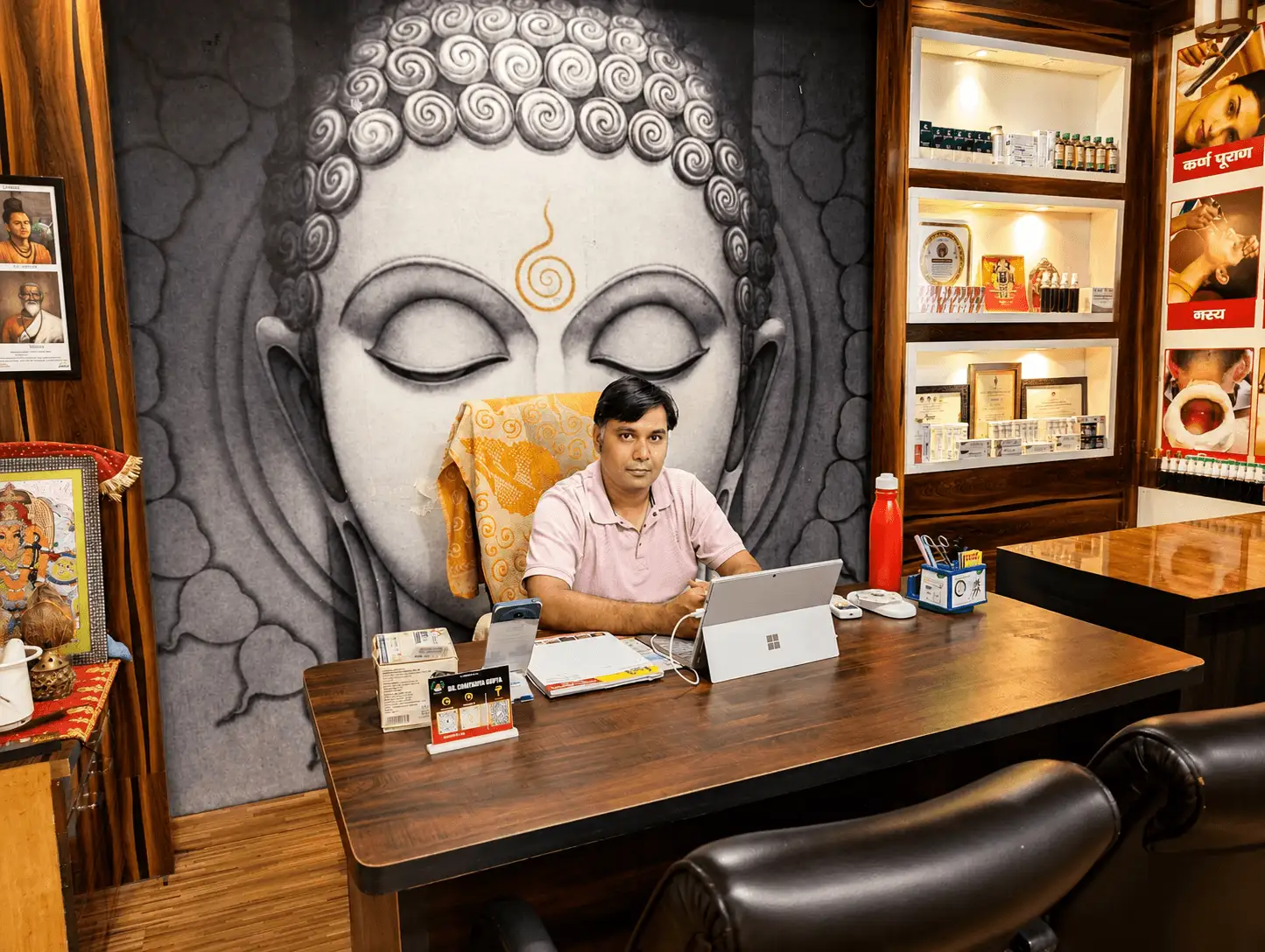
Private & discreet. Consultations for women's health concerns are private and unhurried, and everything you share stays confidential. You can bring a family member if you would like to, and you are examined only as far as is clinically necessary, with your consent and your dignity respected throughout.
Ayurvedic care for PCOS (polycystic ovary syndrome)
PCOS shows up as irregular or missed periods, weight that is hard to shift, acne, unwanted hair growth and difficulty conceiving — with the underlying picture being a hormonal and metabolic one, not just an ovarian one. Ayurveda reads it through Kapha and Meda (fat tissue) with disturbed Agni and Vata affecting the cycle, which is why diet, weight, sleep and stress carry so much weight in the plan.
Care is long-term and honest: Agni- and Kapha-directed internal medicines, Panchakarma such as Virechan or Basti where the physician judges it suitable, Uttar Basti in carefully selected cases, and sustained diet, movement and routine correction. PCOS is managed, not cured — the aim is more regular cycles, better metabolic health and fewer symptoms over time, and holding those gains depends heavily on the changes you keep up. It works well alongside gynaecological care, and we never ask you to stop prescribed treatment.
PCOS is a long-term condition that is managed rather than cured — by Ayurveda or by any other system. Anyone promising to cure it is not being straight with you. Care here is about better cycles, better metabolic health and fewer symptoms, kept up over time.
Ayurvedic care for irregular menstruation
Cycles that arrive late, early, unpredictably or not at all — sometimes with heavy or scanty flow — are described in Ayurveda under the Artava Vyapad, disorders of the menstrual cycle, and read through the doshas along with digestion, weight, sleep and stress. The causes differ a great deal: PCOS, thyroid problems, weight loss or gain, stress, and the natural transitions of the perimenopausal years all look similar from the outside.
Because of that, assessment comes first, including any tests or scans your doctor advises. Care then works on the pattern underneath — internal medicines directed at Vata and Agni, Panchakarma where indicated, and steady correction of routine, food and rest. The aim is a more regular, more predictable and more comfortable cycle over a few months, with an honest explanation of what is realistic for your particular cause.
Periods that stop for several months, unusually heavy bleeding, bleeding between periods, or any bleeding after menopause should be assessed by a gynaecologist — please do not wait on that.
Ayurvedic care for painful periods (Kashtartava)
Period pain that keeps you from work, college or sleep is not something to simply absorb every month. Ayurveda calls it Kashtartava and treats it primarily as a Vata condition of the cycle, often with cold, dryness, irregular meals, constipation and stress feeding into it — which is why the plan looks at the whole month, not only the painful days.
Care combines Vata-pacifying internal medicines with warm oil application and fomentation over the lower abdomen and back, Basti where the physician judges it appropriate, and practical guidance on food, warmth, rest and bowel regularity through the cycle. Most women are looking for pain they can live with and fewer days lost each month — that is the honest target. Severe or worsening pain deserves a gynaecological assessment too, as conditions such as endometriosis or fibroids need to be identified rather than assumed.
Ayurvedic care and support for couples trying to conceive
Trying to conceive without success is exhausting in a way that is rarely acknowledged, and it is often made worse by advice that promises far more than it can deliver. Our position is straightforward: this is care and support for couples trying to conceive, with no promises about conception and no timelines attached. Both partners are best evaluated — a contributing factor is found on the male side about as often as the female side.
Ayurvedic care works on the ground conditions: the cycle and its regularity, digestion and nourishment (Rasa and Shukra Dhatu), weight, sleep and the stress that accompanies this journey. Panchakarma such as Virechan or Basti may be used where the physician judges it suitable, with Uttar Basti in selected cases. Where investigation or specialist fertility treatment should lead — and for many couples it should — Dr. Chaitanya Gupta says so plainly and works alongside it.
This is supportive care, never a promise of conception, and it is not a substitute for gynaecological or fertility-specialist assessment. Age and time matter in fertility, so we would rather send you for proper investigation early than keep you on a therapy course.
The therapies behind this care
Panchakarma therapies we draw on
Which therapy or combination suits you is decided at consultation — never prescribed off a list. These are the treatments most often used for the conditions above.
Honest expectations
What this care can — and cannot — do
- PCOS is a long-term condition that is managed, not cured — the aim is more regular cycles, better metabolic health and fewer symptoms, held over time.
- Fertility care is offered as care and support for couples trying to conceive: no promises about conception, no timelines, and specialist fertility treatment respected when that is the right route.
- Results depend heavily on the diet, weight, sleep and routine changes you sustain alongside the medicines — this is not passive treatment.
- Where a gynaecologist should lead, or where a scan or test is needed first, Dr. Chaitanya Gupta will say so rather than start a course of therapy.
- Consultations are private, unhurried and respectful, and everything you share stays confidential.
Questions, answered honestly
Frequently Asked Questions
Can Ayurveda cure PCOS?
Can Ayurvedic treatment help us conceive?
How long does Ayurvedic treatment for irregular periods take?
Will my consultation be private, and can I bring someone with me?
Can I continue my gynaecologist's treatment alongside this?
Start your healing
Book your appointment
Share a few details and we'll confirm a time on WhatsApp during clinic hours.
Consultations available in Hindi · हिंदी में परामर्श उपलब्ध है