Ayurvedic Management of Varicose Veins
Heavy, aching, visibly swollen leg veins respond to a classical Ayurvedic approach — led by Raktamokshana — that aims to ease symptoms and support circulation.
How Ayurveda approaches varicose veins
Varicose veins develop when leg veins weaken and blood pools, leaving legs heavy, achy and visibly corded. Ayurveda links this to aggravated Vata and vitiated Rakta affecting the vessels.
Management focuses on easing the discomfort, supporting local circulation and slowing progression — with Raktamokshana (leech therapy) often central to the classical approach.
Who this is for
This suits people troubled by symptomatic varicose or spider veins who want a conservative, classical Ayurvedic option.
- Heaviness, aching and fatigue in the legs
- Visible varicose or spider veins
- Mild swelling around the ankles by day's end
- Those who prefer a non-surgical, classical approach
Varicose (venous) leg ulcers
When long-standing varicose veins go unmanaged, the skin around the ankle can break down into a slow-healing wound — a varicose or venous leg ulcer. These are often painful, prone to infection, and frustratingly stubborn, and they need patient, supportive wound care rather than any quick fix.
Ayurvedic management focuses on supporting the underlying circulation and caring for the wound and surrounding skin. Where classically indicated and the tissue is suitable, Raktamokshana (leech therapy) may be used to relieve local congestion around the area. This is offered honestly as supportive care — non-healing ulcers can be difficult, results vary, and we make no guarantee of healing.
Some ulcers are large, deep, infected, or linked to other conditions such as diabetes or arterial disease, and these need proper medical or surgical wound care. Dr. Chaitanya Gupta will assess honestly and direct you to specialist care when that is the safer route, rather than delay appropriate treatment of a wound that is not healing.
The Ayurvedic approach
A considered, step-by-step process
- 1
Assessment
The physician examines the legs, reviews your history, and checks whether Raktamokshana is appropriate.
- 2
Raktamokshana (leech therapy)
Where suitable, medicinal leeches are applied locally to support circulation and ease congestion in the affected area.
- 3
Herbal & external support
Internal Ayurvedic medicines and external applications to strengthen and soothe.
- 4
Lifestyle & review
Guidance on movement, leg care and daily habits, with follow-up to track comfort.
Traditionally used for
Conditions this therapy is used to support
- Heaviness and aching in the legs
- Visible varicose and spider veins
- Mild end-of-day ankle swelling
- Leg fatigue from prolonged standing
- Support for local circulation
Ayurvedic care is traditionally used to ease the symptoms of varicose veins and support circulation — it is not a guaranteed cure and does not replace surgical assessment where that is needed. Results vary, and severe cases should also be reviewed by a vascular specialist.
What to expect
Your visit, step by step
- An assessment to confirm whether leech therapy suits your legs.
- Sessions planned as a short series where appropriate.
- Practical advice on movement, elevation and leg care.
- Honest guidance on when to seek a specialist opinion.
Raktamokshana for the legs
What leech therapy for varicose veins looks like
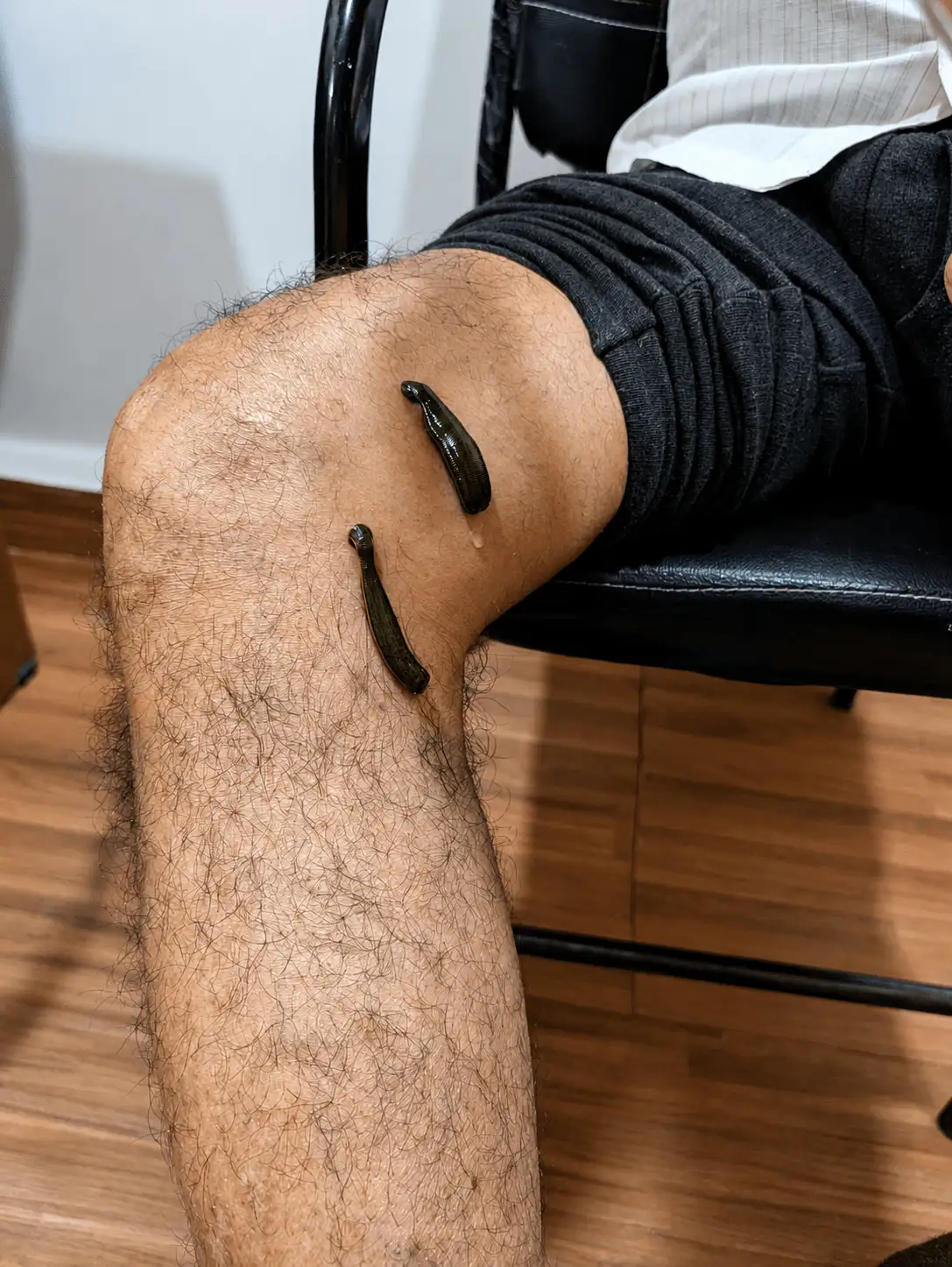
Leech therapy for varicose veins is carried out on the affected part of the leg, in the clinic, under Dr. Chaitanya Gupta's direct supervision. Each leech is sterile, medically reared and used once only — never reused between patients. The number of leeches, the sites and the spacing between sessions are decided at consultation, and the therapy is only offered where it genuinely suits your legs.
Individual results vary. Leech therapy eases symptoms and supports circulation — it does not reverse varicose veins, and severe cases should also be assessed by a vascular specialist.
Why Ayurveda Gokulam
Care you can trust in Indore
- Raktamokshana performed by a registered Ayurvedic physician, not a technician.
- Single-use, non-toxic medicinal leeches in a clean clinical setting.
- A conservative, classical option before considering surgery.
- Clear, honest advice about the limits of Ayurvedic management.
Related care
Explore connected therapies & conditions
Questions, answered honestly
Frequently Asked Questions
Can Ayurveda cure varicose veins?
How does leech therapy help varicose veins?
Is this a substitute for surgery?
Start your healing
Book your appointment
Share a few details and we'll confirm a time on WhatsApp during clinic hours.
Consultations available in Hindi · हिंदी में परामर्श उपलब्ध है