Women's Health • 5 min read Case note
Persistent Breast Pain, Heaviness and Itching With Normal Investigations – An Ayurvedic Clinical Case
Breast pain can become much more than a physical symptom when it continues for months. Persistent pain, heaviness or discomfort may affect clothing, social activities, sleep and a person's overall sense of well-being.
One patient's experience, shared with consent and identifying details withheld. Individual results vary.
Written by Dr. Chaitanya Gupta, B.A.M.S. (Reg. No. 56576) Published 8 October 2026 Editorial policy
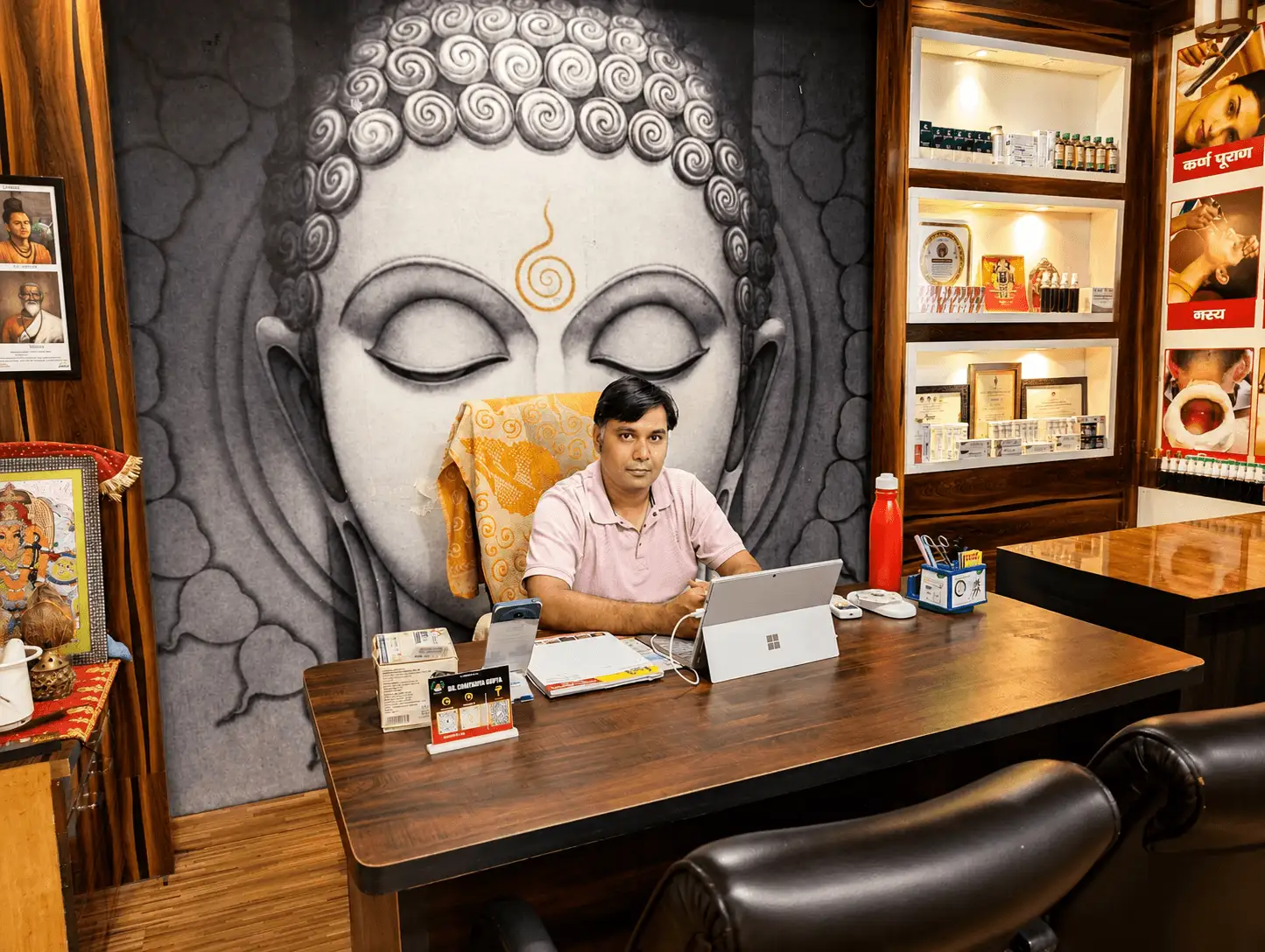
This was the situation of a 45-year-old female who consulted at Ayurveda Gokulam Panchakarma Kendra, Vijay Nagar, Indore, with persistent pain, heaviness, tightness and itching involving both breasts.
Her symptoms had been present for approximately one year.
Her Experience at the First Visit
During her first consultation, the patient appeared deeply troubled by the problem.
She explained that she had already consulted a gynecologist and undergone the advised investigations. According to her, the investigations had been reassuring, but she continued to experience pain, heaviness, tightness, itching and persistent discomfort in both breasts.
She reported that she had been told her symptoms could be related to the perimenopausal period and might settle after menopause.
But for her, waiting for menopause felt difficult because the symptoms were already interfering with her everyday life.
She described the discomfort as severe enough that she was unable to comfortably wear a bra. She had also started avoiding social functions and gatherings because of the breast discomfort.
The problem had made her restless and worried.
One of the questions troubling her was essentially:
“When will menopause come, and when will this problem finally go away?”
This was not simply an occasional episode of breast pain for her. She had been living with the symptoms for around a year, and they were affecting her comfort and normal activities.
What Brought Her to Ayurveda?
The patient eventually came to us through a friend’s recommendation.
According to the patient, her friend had previously experienced a similar problem and had undergone Ayurvedic treatment with us with a satisfactory outcome.
After hearing about her friend’s experience, she decided to consult us with the hope that an individualized Ayurvedic approach might help her persistent symptoms.
Clinical History
Her main complaints at presentation were:
- Persistent pain in both breasts
- Heaviness in both breasts
- Tightness
- Itching
- General breast discomfort
- Difficulty comfortably wearing a bra
- Interference with social activities
There was no palpable breast lump on examination.
Her menstrual cycles were regular.
One particularly important observation emerged during detailed history-taking: her breast symptoms decreased during menstrual flow.
This pattern became relevant when considering the case from an Ayurvedic perspective.
Previous Investigations
The patient had undergone breast investigations, including sonography and mammography.
The available investigations did not reveal a significant abnormality explaining the persistence of her symptoms.
Reassuring investigations are important, but persistent breast symptoms should still be clinically evaluated and followed appropriately.
Ayurvedic Understanding of the Case
Ayurvedic clinical assessment considers not only the symptom itself but also its pattern, associated factors and relationship with other physiological processes.
In this case, particular attention was given to the Ayurvedic relationship between Rakta, Artava and Stanya.
The observation that her breast discomfort decreased during menstrual flow was considered alongside her other findings while understanding the case and planning management.
This interpretation was specific to this patient and should not be considered an explanation for every woman experiencing breast pain.
Individualized Ayurvedic Treatment
After reviewing her history, clinical findings and available investigations, an individualized Ayurvedic treatment plan was advised.
Management included:
- Internal Ayurvedic medicines selected according to her clinical assessment
- Raktamokshana through Siravedha (Siravyadha) (a classical, doctor-performed method of therapeutic bloodletting from a vein)
The names and doses of the internal medicines are intentionally not provided because Ayurvedic medicines should be prescribed according to an individual’s clinical assessment and should not be copied from another patient’s treatment.
Raktamokshana Through Siravedha
Raktamokshana is a therapeutic procedure described in Ayurveda. Based on the clinical assessment in this particular case, Siravedha (Siravyadha) was selected as the method of Raktamokshana.
A total of two sessions were performed.
The first Siravedha procedure was performed through a suitable vein at the right cubital fossa. Approximately one month later, a second session was performed through the left cubital fossa.
Both procedures were carried out under clinical supervision.
Treatment Duration and Progress
The Ayurvedic management was continued for approximately three months.
During treatment, the patient reported that her pain, heaviness, tightness, itching and overall breast discomfort progressively reduced.
By the completion of treatment, she reported that the complaints for which she had originally consulted had resolved.
She also reported that the improvement was maintained through subsequent menstrual cycles.
Clinical Outcome
At follow-up, she reported that:
- The breast pain had settled
- The heaviness had settled
- The itching had settled
- The tightness and discomfort had settled
- The improvement continued through subsequent menstrual cycles
For a patient who had initially been worried about having to wait until menopause for relief, this represented a meaningful improvement in her day-to-day comfort.
This remains an individual clinical case, however. It does not establish that the same treatment will produce the same outcome in every woman experiencing breast pain.
What This Case Highlights
This case highlights the importance of listening carefully to how a patient’s symptoms behave, rather than focusing only on the name of the complaint.
In this patient, the duration of symptoms, normal/reassuring investigations, relationship with menstruation, absence of a palpable lump and effect on everyday life were considered together before planning individualized Ayurvedic management.
Her treatment incorporated internal Ayurvedic medicines along with Raktamokshana through Siravedha, followed by observation of her symptoms over subsequent menstrual cycles.
Questions, answered honestly
Frequently Asked Questions
Should breast pain with normal tests still be followed up?
Is this treatment suitable for every woman with breast pain?
What warning signs need a doctor straight away?
Related care at Ayurveda Gokulam
More articles
Pain & Joints • 5 min read Case note
Sciatica With Limping: A 7-Day Panchakarma Case From Indore
Sciatica pain can sometimes become severe enough to make even simple activities such as standing and walking difficult.
Read article