Panchakarma at Ayurveda Gokulam
Panchakarma Therapies at Ayurveda Gokulam
Panchakarma is Ayurveda's classical five-action system for clearing accumulated imbalance and rebuilding strength. Each therapy below is delivered by a registered Ayurvedic physician in Vijay Nagar, Indore.
What Panchakarma is
Panchakarma means “five actions”. In classical Ayurveda it is a set of five cleansing and rebalancing procedures, each aimed at a particular route by which accumulated imbalance can be cleared. At Ayurveda Gokulam, Dr. Chaitanya Gupta chooses from them one at a time, or in combination, only after examining you.
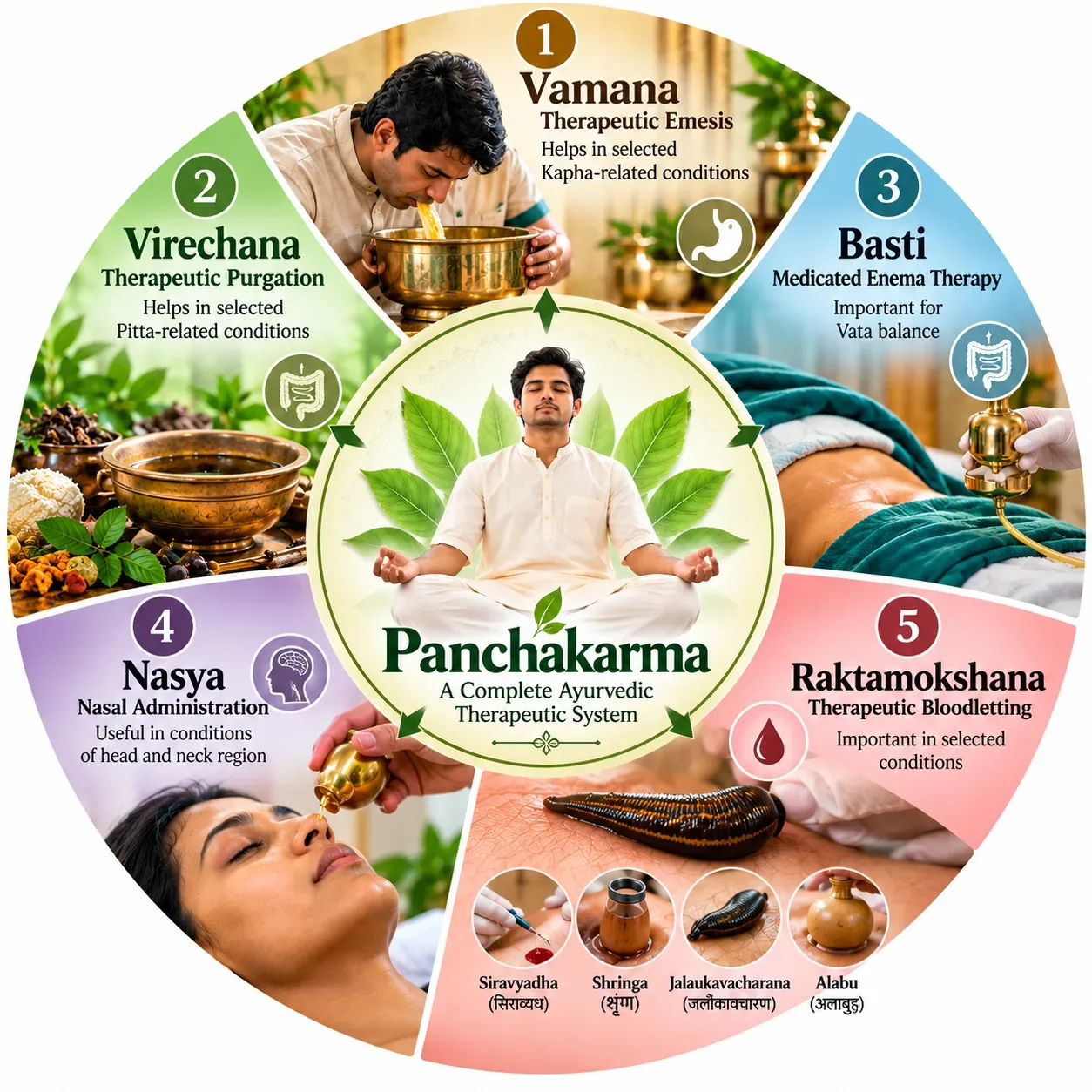
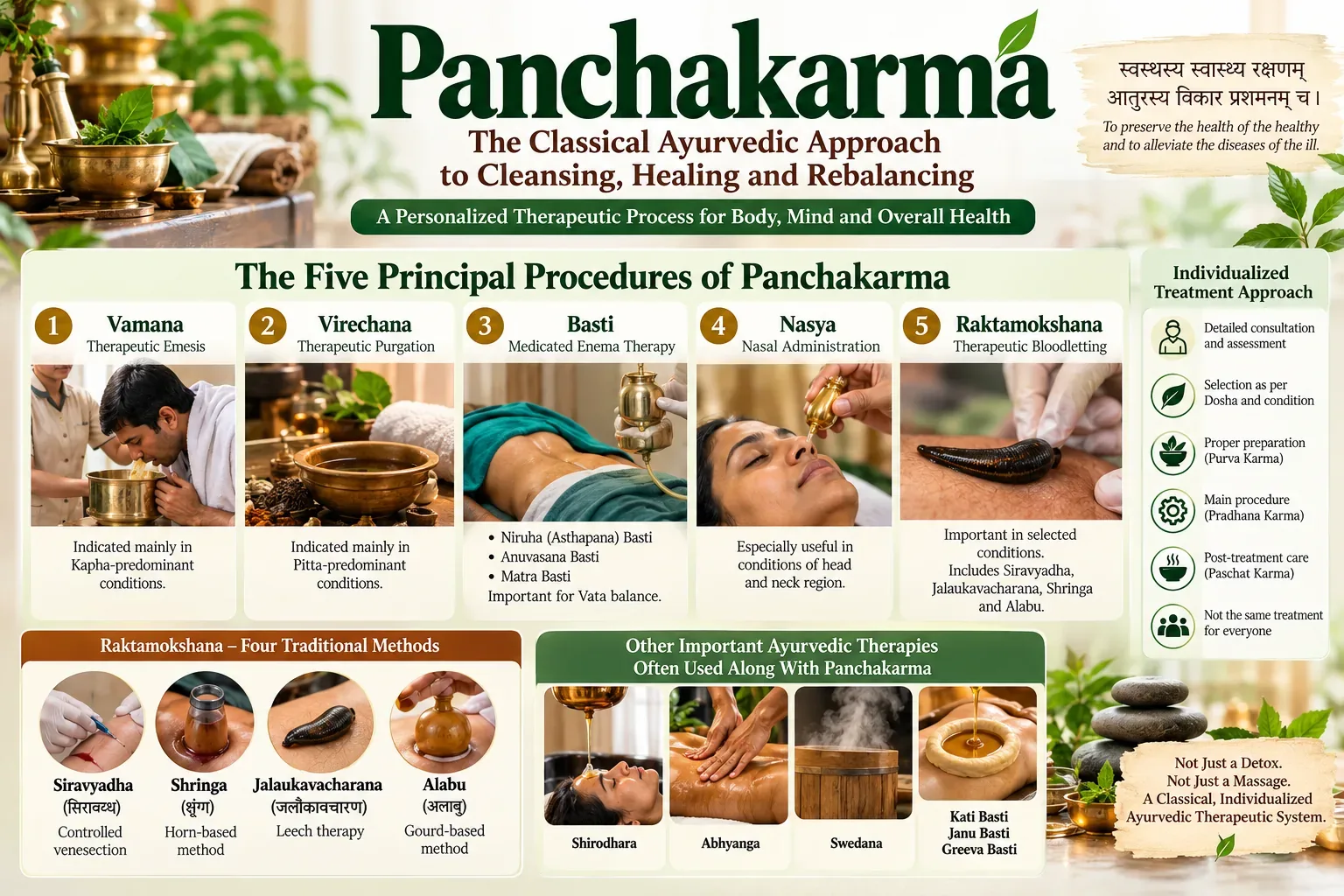
- Vaman — supervised therapeutic emesis, classically used for Kapha-dominant conditions.
- Virechan — supervised therapeutic purgation, classically used for Pitta-dominant conditions.
- Basti — medicated enema therapy, the cornerstone treatment for Vata disorders.
- Nasya — medicated oils given through the nose for the head, sinuses and neck.
- Raktamokshana — classical therapeutic bloodletting, including leech therapy.
Vaman and Virechan are intensive and are prescribed only after assessment and preparation. Not everyone needs all five: many people need only one, and some do not need any of them.
Purvakarma: Snehan & Swedan
Before a main procedure comes Purvakarma, the preparation phase. Snehan is oleation, the application of medicated oil, internally or externally. Swedan is therapeutic warmth or sweating. Together they soften and mobilise accumulated imbalance so that the main procedure can be done safely.
This is why Vaman and Virechan are never done on demand. Snehan and Swedan are also offered on their own as supportive therapies, and they sit inside our sciatica and cervical protocols.
Who it suits, and who should wait
Panchakarma tends to suit people with long-standing, recurring or lifestyle-linked concerns, such as pain and stiffness in the back, neck and joints, digestive and skin conditions, and stress or poor sleep, who want a supervised plan.
It is not for everyone, and not for every moment. The doctor may advise waiting, or a different route, if you have an active fever or acute illness, are pregnant, are very weak or recovering, or have a condition that needs medical or surgical attention first, for example progressive weakness, numbness in the saddle area, or a change in bladder or bowel control. We say so on day 1. Where your existing treatment continues, we work alongside it; we never ask you to stop prescribed medicine.
How long a course takes
There is no single length; it is decided at consultation. Usual bands at this clinic: for sciatica, lumbar pain and cervical spondylosis, some cases need 3–4 sittings, some a 7-day course and some a 14-day course; knee pain and osteoarthritis often around 20 days; frozen shoulder typically 5–6 sittings in suitable cases; tennis elbow typically 4–5 sittings; heel pain about 4. These are usual bands, not a promise.
For general wellness, the structured 7-Day and 14-Day packages are the set options.
What happens on day 1
The first visit is a consultation, not a treatment session. Dr. Gupta takes your history, examines you, and asks one question first: can Panchakarma treat this case? The answer is one of three:
- It can be treated here as the primary plan.
- It can be supported here alongside your medical care.
- It needs a medical or surgical opinion first.
You leave knowing which group you are in and, if Panchakarma is suitable, which therapies and roughly how many sittings. Bring any reports you have, and a list of the medicines you take.
Leech Therapy
SignatureOne of the gentlest of the classical Raktamokshana methods, performed with non-toxic medicinal leeches and clinical care — for stubborn skin and vascular concerns.
Learn more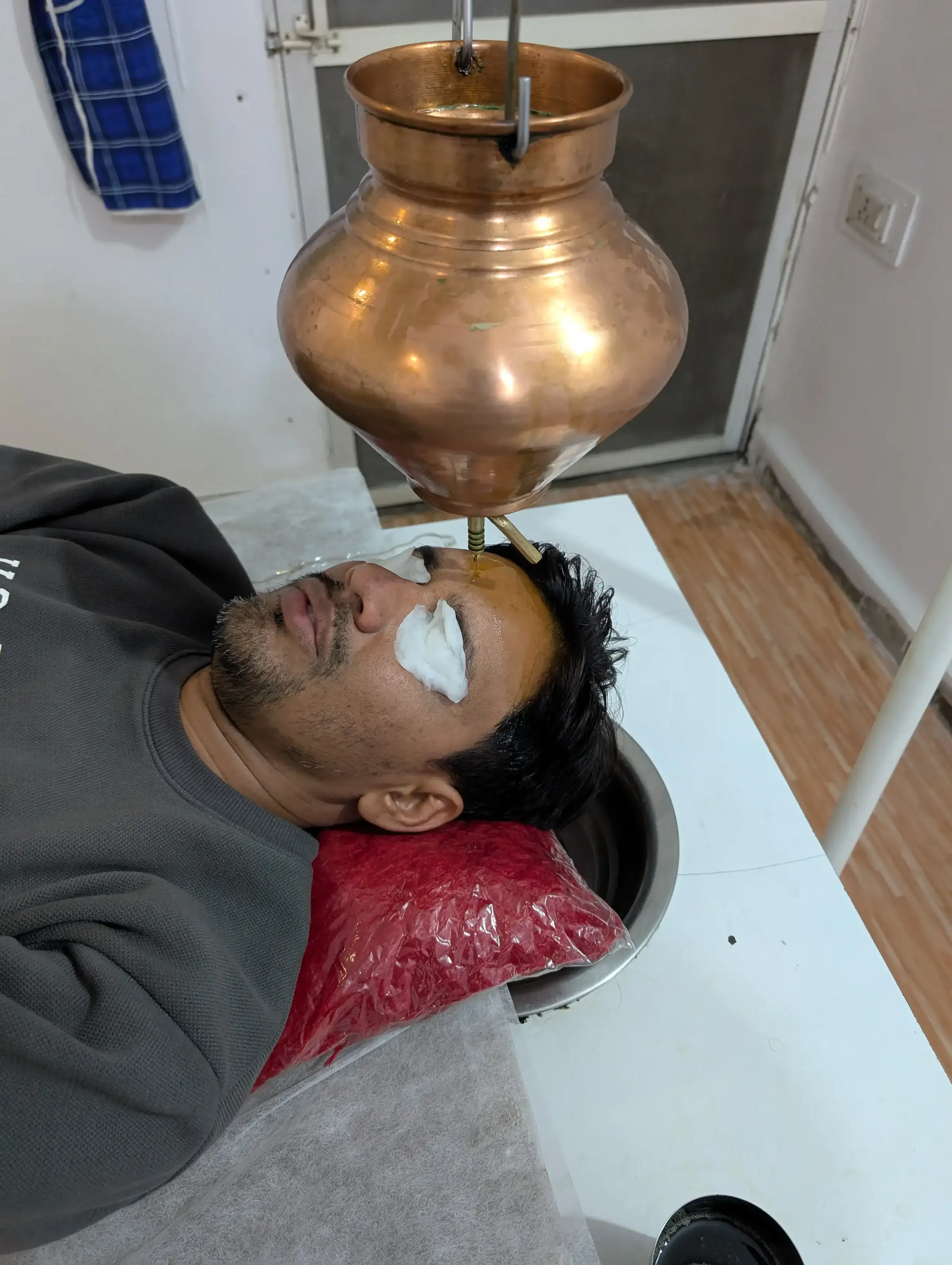
Shirodhara
A warm, unbroken stream of medicated oil poured gently over the forehead — one of Ayurveda's most loved treatments for a restless mind and tired nervous system.
Learn more
Basti
Often called the most important of the five Panchakarma actions, Basti uses medicated preparations to clear and rebuild — especially where Vata is at the root.
Learn more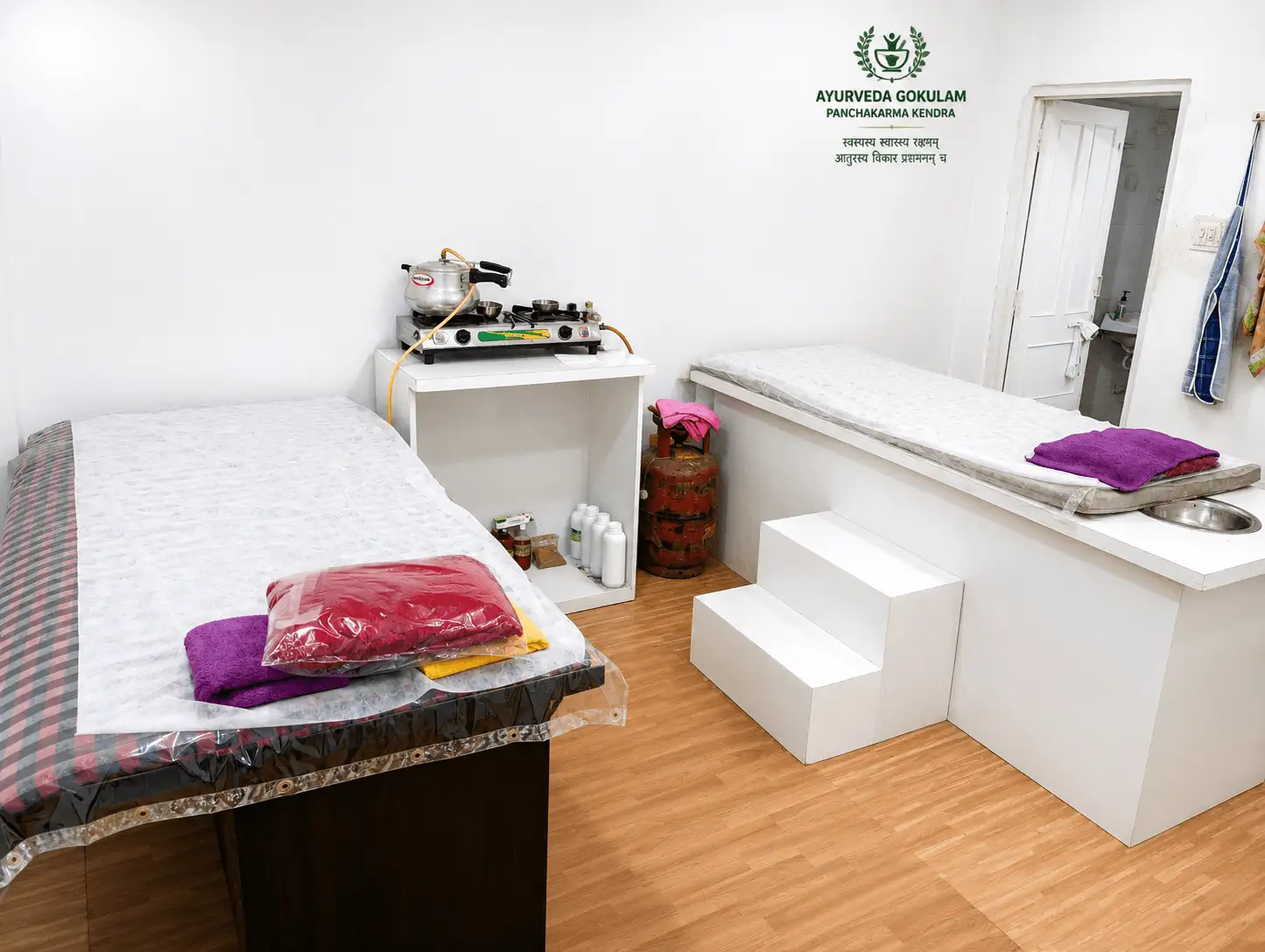
Nasya
The nose is considered the doorway to the head. Nasya delivers medicated oils through the nasal passage to address concerns of the head, sinuses and neck.
Learn more
Ayurvedic Chronic Care & General Wellness
Recurring conditions and long-term metabolic health rarely have a single cause. Our approach looks at the whole person — digestion, sleep, stress and constitution — as supportive care that runs alongside your ongoing medical treatment.
Learn moreLocalized Oil-Retention Therapies
Kati Basti, Janu Basti, Greeva Basti and more — warm medicated-oil pools held over a painful area to ease stiffness and pain, delivered by a registered Ayurvedic physician in Vijay Nagar, Indore.
Learn moreKati Basti
Kati Basti in Vijay Nagar, Indore — a warm pool of medicated oil held over the lower back, used inside 3–4, 7 or 14-day sciatica and lumbar courses.
Learn moreJanu Basti
Janu Basti in Vijay Nagar, Indore — a warm pool of medicated oil held over the knee, used inside courses often around 20 days.
Learn moreGreeva Basti
Greeva Basti in Vijay Nagar, Indore — a warm pool of medicated oil held over the neck, used inside 3–4, 7 or 14-day cervical courses.
Learn moreVaman & Virechan — Shodhana Therapies
The two deep purification karmas of Panchakarma — therapeutic emesis (Vaman) and purgation (Virechan) — completing the classical five-action cleanse, prescribed only after careful assessment and preparation.
Learn moreAgnikarma & Viddha Karma
Classical para-surgical therapies from the Sushruta tradition — Agnikarma (therapeutic heat) and Viddha Karma (needling) — used for localised, stubborn pain, with suitability decided honestly at consultation.
Learn moreCupping Therapy
Traditional suction therapy that draws stagnation to the surface — used supportively for muscular pain, stiffness and certain skin concerns, delivered hygienically under a registered physician.
Learn moreAbhyanga, Pottali Massage & Restorative Therapies
The nourishing, sensory side of Ayurveda — warm-oil Abhyanga, herbal Pottali massage, Karna Puran ear care and Akshitarpan eye care — restorative therapies that soothe body and senses.
Learn moreThe full range
Every therapy we offer
Ayurveda Gokulam offers the complete classical range, grouped by family below. Each therapy links to a page — or the relevant section — where you can read more.
Panchakarma — the five classical actions
Basti family (internal)
Niruha, Anuvasan, Matra Basti / Tikta Ksheer Matra Basti and the Uttar Basti variants are all covered on the Basti page.
Localized oil therapies
Shirodhara
Para-surgical (Sushruta tradition)
Cupping
Supportive & restorative
Conditions we focus on
Specialty care led by Panchakarma
Our therapies come together in dedicated care pathways for specific conditions.
Questions, answered honestly
Frequently Asked Questions
What is Panchakarma?
Is Panchakarma safe?
How do I know which therapy I need?
How long does a Panchakarma programme take?
What happens at the first Panchakarma consultation?
Who should wait or avoid Panchakarma?
Can I have Panchakarma while taking regular medicines?
Is Panchakarma the same as a spa massage?
Start your healing
Book your appointment
Share a few details and we'll confirm a time on WhatsApp during clinic hours.
Consultations available in Hindi · हिंदी में परामर्श उपलब्ध है