Pain & Joints • 5 min read Case note
Severe Sciatica Pain and Limping: A 7-Day Ayurvedic Panchakarma Treatment Experience
Sciatica pain can sometimes become severe enough to make even simple activities such as standing and walking difficult.
One patient's experience, shared with consent and identifying details withheld. Individual results vary.
Written by Dr. Chaitanya Gupta, B.A.M.S. (Reg. No. 56576) Published 8 October 2026 Editorial policy
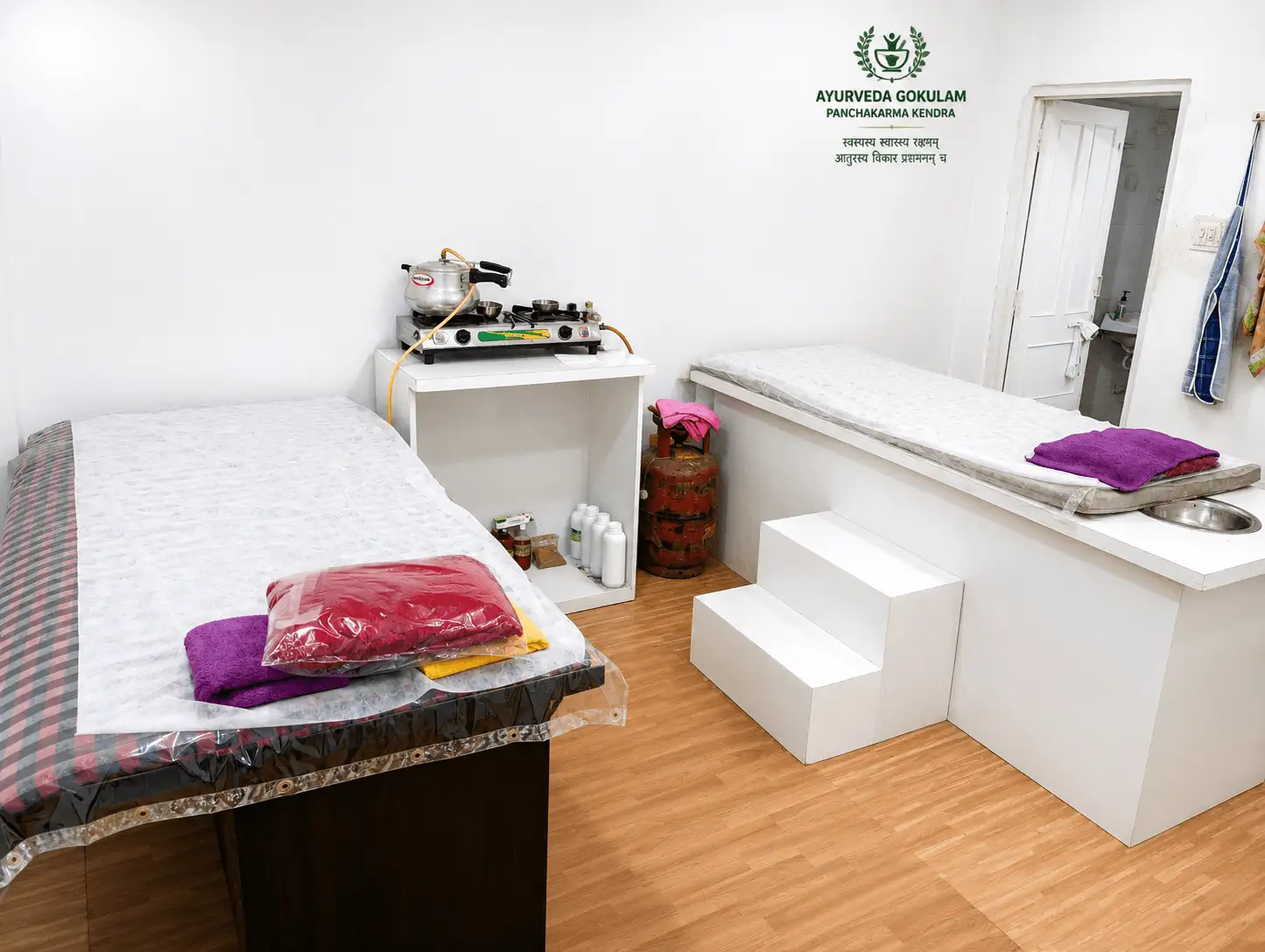
Recently, a 36-year-old male patient suffering from severe sciatica pain visited Ayurveda Gokulam Panchakarma Kendra, Vijay Nagar, Indore.
For around two weeks, he had been experiencing intense pain. By the time he visited us, the discomfort was affecting his ability to stand and walk normally, and he was walking with a noticeable limp.
Interestingly, Ayurveda was not initially his first choice.
“My Sister Asked Me to Visit You”
During his first consultation, the patient explained that he had been suffering from severe pain for nearly two weeks.
The pain had reached a point where he was unable to stand comfortably or walk properly without pain. Because of the discomfort, his walking pattern had also changed and he had started limping.
His sister recommended that he visit our centre and consider Ayurvedic treatment.
After her repeated encouragement, he finally decided to consult us with the hope of getting relief.
Understanding His Condition
After taking his history and clinically examining him, his symptoms were assessed as sciatica.
Rather than focusing only on reducing the pain temporarily, we planned an individualized Ayurvedic management programme according to his clinical presentation.
Considering the intensity of his symptoms and difficulty in walking, a combination of Panchakarma therapies, Agnikarma and internal Ayurvedic medicines was advised.
A 7-Day Ayurvedic Panchakarma Plan
A structured seven-day treatment programme was planned.
The treatment included:
- Abhyanga
- Swedana
- Kati Basti
- Agnikarma
- Individualized internal Ayurvedic medicines
He was advised to visit our Panchakarma centre daily for seven days.
His treatment required approximately three hours at the centre each day, during which the planned therapies were performed under supervision.
The exact names and doses of internal medicines are intentionally not mentioned because Ayurvedic medicines should be selected according to each patient’s individual clinical assessment and should not be copied from another patient’s treatment.
The First Change Was Seen Within 2 Days
One of the most encouraging parts of this case was the early change in his symptoms.
After approximately two days of treatment, the patient reported that his pain had reduced noticeably.
He was also able to walk more comfortably and with considerably less pain compared with his first visit.
Although he was already feeling better, we continued the complete seven-day treatment programme as planned.
What Happened After 7 Days?
By the completion of the seventh day, there was a marked difference compared with his first visit.
He reported that the pain and discomfort had resolved.
In this case, the limping that had been noticeable when he first entered the clinic was no longer present at his final visit.
He reported being able to:
- Stand comfortably
- Walk normally
- Walk without the previous pain
- Perform normal movement without the discomfort that had brought him to the clinic
For someone who had entered the clinic just seven days earlier struggling to walk normally because of pain, this was an encouraging clinical outcome.
What He Told Us on the Last Day
Perhaps the most memorable part of his treatment came on the final day.
After completing the seven-day Panchakarma programme, the patient shared his surprise about his experience with Ayurveda.
He told us:
“Sir, I didn’t know Ayurveda could work this fast. If my sister hadn’t forced me to come here, I probably wouldn’t have visited for Ayurvedic treatment. Thank you for this wonderful treatment.”
— the patient, on his last day of treatment
His words reflected his personal experience and his initial hesitation about trying Ayurveda.
However, the speed and extent of improvement seen in this case were specific to this patient. Every patient with sciatica does not necessarily respond in the same way or within the same timeframe.
Why Did We Use a Combination of Therapies?
Sciatica does not present exactly the same way in every patient.
For this patient, we selected a combination of Abhyanga, Swedana, Kati Basti and Agnikarma, along with individualized internal Ayurvedic medicines.
Rather than considering any one procedure as the entire treatment, these therapies were used as different components of his overall management plan.
Another patient experiencing sciatica may require a different combination of therapies depending on symptoms, severity, examination findings and overall clinical assessment.
Pain Relief Wasn’t the Only Change
An important point in this case was that we did not look only at whether the patient’s pain had reduced.
At his first visit, his symptoms were interfering with a basic function—walking.
He was limping and was unable to stand or walk comfortably.
During the seven-day treatment programme, his walking progressively improved along with the reduction in pain.
By the final day, he reported being able to stand and walk normally without the pain and limping that had originally brought him to the clinic.
This improvement in day-to-day function was an important part of assessing his progress.
What Can We Learn From This Sciatica Case?
This case highlights the importance of properly assessing a patient rather than treating every episode of sciatica in exactly the same way.
For this patient, a structured seven-day programme involving Panchakarma therapies, Kati Basti, Agnikarma and individualized Ayurvedic medicines was selected after clinical assessment.
He experienced noticeable improvement within the first two days and reported resolution of his pain and walking difficulty by the end of the seven-day programme.
However, this remains the experience of one individual patient.
The same treatment should not automatically be copied for another person with sciatica, and the outcome or treatment duration cannot be guaranteed.
Experiencing Sciatica Pain?
Sciatica may cause pain that travels along the course of the sciatic nerve and can sometimes interfere with standing, walking and everyday activities.
Persistent or severe symptoms should be properly evaluated, particularly when accompanied by weakness, numbness or other neurological symptoms.
After appropriate clinical assessment, an Ayurvedic physician may consider individualized medicines, Panchakarma therapies and procedures such as Kati Basti or Agnikarma where appropriate.
The aim should always be to understand the patient’s condition first and then select treatment accordingly.
Questions, answered honestly
Frequently Asked Questions
How many days of Panchakarma are needed for sciatica?
Is the same treatment given to every sciatica patient?
When should sciatica be checked by a doctor urgently?
More articles
Women's Health • 5 min read Case note
Breast Pain and Heaviness With Normal Tests: An Ayurvedic Case
Breast pain can become much more than a physical symptom when it continues for months. Persistent pain, heaviness or discomfort may affect clothing, social activities, sleep and a person's overall sense of well-being.
Read article